

The Most Important Trainer You've Never Heard Of
This is the story of how an obscure sneaker that didn't even carry the logo of the company that made it, helped to change the world - in ways we're still reckoning with even today...
Ask a trainer aficionado - a “sneakerbuff” as they’re sometimes called - to name the most important shoes in history and the chances are they will alight on a few familiar options.
There’s the Converse Chuck Taylor All Star: the world’s first basketball sneaker. There’s the Nike Air Jordan and the Reebok Pump, and for that matter the Adidas Samba. Or what about the very latest big thing in running shoes, the ones in which Sebastian Sawe ran the first ever competitive two hour marathon: the Adidas Adizero Adios Pro Evo 2?
These are, don’t get me wrong, all significant, even iconic shoes. But for me, the single most important shoe in history is another one - a shoe few people have ever heard of, few would ever recognise and few people ever wore. Come to mention it, the most important shoe in history is so obscure it never even carried the logo of the company that made it.
When I tell you that the company in question was Nike - and that without this shoe the biggest name in the sports business might never have survived to become the brand it is today, perhaps you might begin to realise its significance.
But it turns out that’s only the start of it. For the story of this shoe isn’t just about a single (albeit enormously consequential) company. It’s about the very nature of the modern world. It’s about the deindustrialisation of the West - about the collapse of the rust belt in America and Britain. It’s about the rise of figures like Donald Trump and Nigel Farage and about the rise of China. For real.
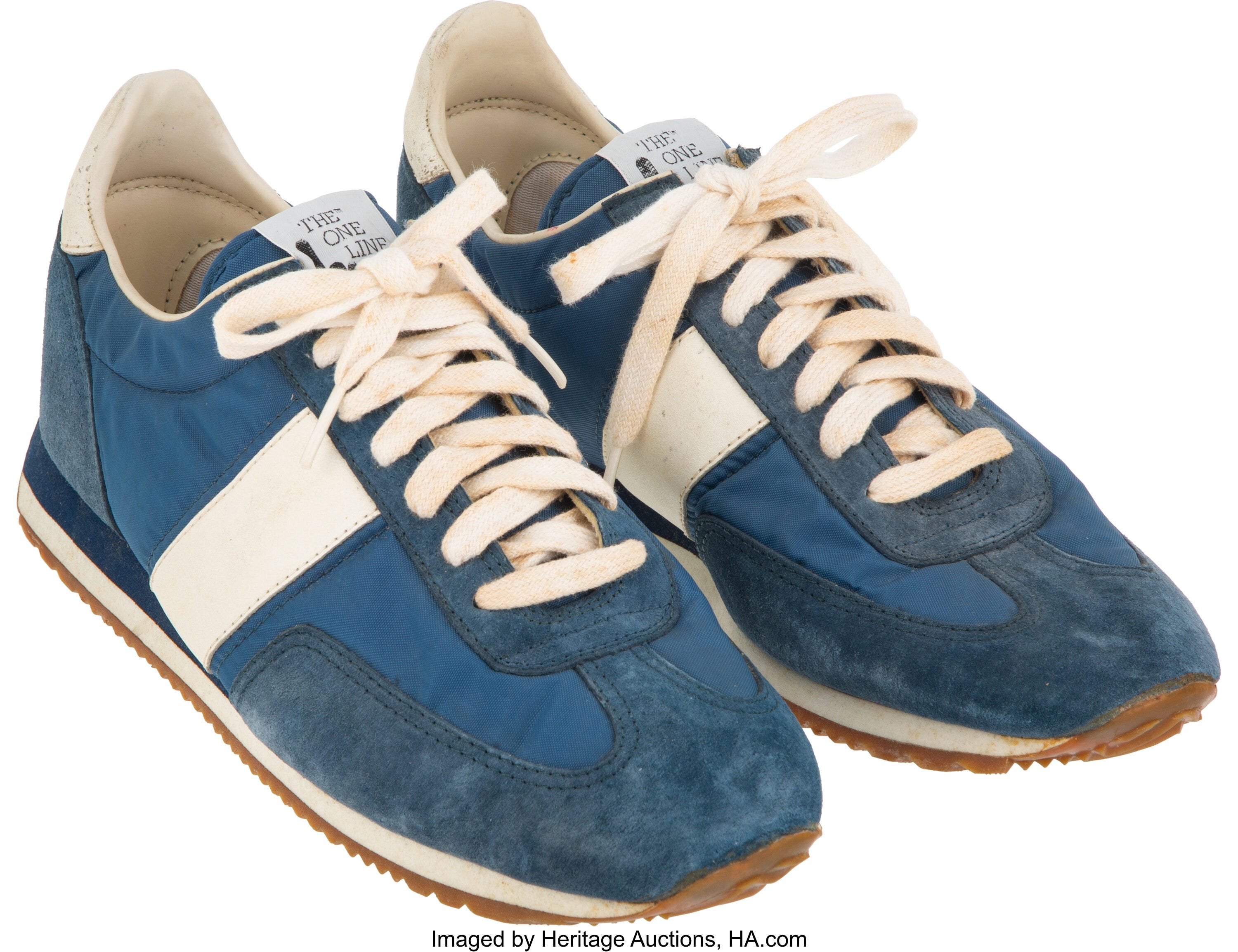
We’ll get to all that in due course but at this stage you probably want to know what shoe I’m talking about. Well, this epochal sneaker, the sneaker to end all sneakers, is… an obscure 1980 trainer called the One Line.
Now I realise that on the face of it, this might be somewhat underwhelming. The shoe looks, well, a lot like many other trainers from the mid to late 1970s. The sole is thin, the toe box is tapered, the upper is made of nylon and suede, and on each side the trainers have a big white stripe. It isn’t even particularly well-made. But these shoes were at the centre of a legal battle that helped create the modern economy as we know it.
The story behind the One Line really begins in the early 1970s. Back then what would eventually become the world’s biggest sportswear company wasn’t even called Nike; it was known as Blue Ribbon Sports, and its main role was to act as a sort of distributor of shoes made by another company altogether, a company from Japan called Onitsuka Tiger. Blue Ribbon’s genesis went back to a thesis written by its founder, Phil Knight, back in business school in the 1960s, where he documented how Japanese camera manufacturers like Nikon and Canon had outcompeted their European rivals like Leica and Zeiss, and wondering whether the same thing could eventually happen with training shoes.
After leaving Stanford, Knight spent part of his time working as an accountant and part of his time working to import shoes made by Onitsuka Tiger into the US. Together with his old track coach, a man called Bill Bowerman who had for years been trying to bodge together lighter and lighter running shoes, he built Blue Ribbon into a decent import business. But eventually the relationship with Onitsuka soured and Knight was forced to set up his own company, which is when the Nike brand really began.
But round about the same time - this critical juncture for the business - Knight became mired in an attritional battle with the US authorities, a battle that came down to an obscure piece of legislation known as American Selling Price (ASP).
ASP is one of many fragments of American law that look preposterous and yet have an outsized economic effect. The law went back to the 1920s, when the country was facing an influx of cheap chemicals imports from Germany. And the principle was relatively simple: when an imported chemical (actually strictly speaking benzenoid chemicals) was being sold in America, the customs rate it would have to pay should be calculated not on the manufacturer’s costs but on something else: how much similar American-made items cost. That might sound like a minor distinction, but when you think about it it’s rather a big deal: if something costs far more to make in America than overseas, that would mean that any cheap imports would face disproportionate charges.
The idea was to protect domestic chemicals producers, but in the following years, the American Selling Price principle was extended to a few other items: canned clams (to protect New England fishermen), woollen gloves and - you see where this is going - rubber-soled footwear with fabric uppers (including sneakers).
This rag-tag bunch of different items was the collective consequence of horse-trading behind the scenes in Congress. In the case of sneakers, it so happened the US was facing an influx of cheap trainers from Eastern Europe, so American manufacturers argued they should be protected, and lo and behold importers had to pay customs based on the American Selling Price.
Incidentally, in the version of this story told by Phil Knight (as you’ll see, this saga has become a sort of foundational legend for Nike), much is made of the bizarre nature of ASP, and that fact that sneakers were arbitrarily lumped in with obscure chemicals and clams for a bizarre archaic trade rule. Well, in many respects it’s hard to argue with that. But then again, this is sort of the way trade rules have often operated in America.
The most famous example is probably the “Chicken Tax” of the 1970s, a trade battle between the US and Europe which was supposed, as the name suggests, to be all about chicken imports and somehow turned into a set of tariffs on the import of trucks and vans. The Chicken tax is still in place, and is still part of the explanation for why American car market is dominated by trucks even today. It’s a nice example (and not the only one) of how often what we think are cultural phenomena are actually the product of obscure trade rules. Much more on that in a book coming soon.
Anyway, all of this is to say: it was by no means inevitable that these random trade barriers, many of which go back decades to the high point of American protectionism in the 1920s and 1930s, would ever be dismantled.
Roll on to the early 1970s, and the ASP began to become a serious problem for Nike. After all, Phil Knight’s company’s entire business model, even after breaking with Onitsuka, was to import cheap trainers manufactured in Asia to the US to sell to American customers. If the customs rules, ridiculous as Knight thought they were, were going to be imposed, that would be an existential problem for Nike. And that, to cut a long story short, is precisely what happened.
US Customs told the fledgling company that under the terms of ASP it would have to pay a whopping $25 million bill. This was about the same amount as the fledgling company’s entire annual turnover. Paying it would plausibly result in the implosion of Nike itself. So, as Phil Knight explained while recounting the incident in a graduation speech at the Stanford Graduate School of Business in 2014, this represented the very beginning of a “fight for our very lives.”
Now, it might seem slightly odd, given how many other things, from its brand to its sponsorship to its fame ever since, that Knight would focus so much on this odd customs rule no-one has ever heard of. But there is a reason he puts it at the heart of the Nike story - and indeed made it the very climactic point of his autobiography, Shoe Dog. Partly it’s the obvious: that this was life or death for his company - that without winning this battle Nike simply wouldn’t have survived. But partly, I think, it’s because this was also something else: a critical turning point for the global economy. Knight and Nike changed the world in all sorts of ways we are still getting our heads round today.
Anyway, as Knight explains, in the months after getting that bill from US Customs, he launched into a multidimensional battle against the Government (or as he calls them, the bureau-kraken). He hired lobbyists to take them on, he launched a PR battle, including a TV commercial “telling the story of a little company in Oregon, fighting the big bad government. It opened on a runner doing his lonely road work, as a deep voice extolled the ideals of patriotism, liberty, the American way. And fighting tyranny”. He launched an antitrust suit against Nike’s competitors, alleging that they were attempting to destroy this upstart start-up. And then, in a brainstorming session, Nike’s directors came up with their most subversive idea yet: to hack the American Selling Price system itself.
The principle was quite simple. The whole point of the ASP was that it was unfair for a foreign company to come in and sell shoes for what it cost to manufacture them in, say, Japan or Taiwan. So let’s say you’ve got a pair of trainers coming over from Japan and they cost $5. If the tariff is 20 per cent then that means you have to pay one dollar in customs. Under ASP, those charges were calculated not based on the $5 those Japanese sneakers were selling for but based on what a similar shoe cost to make in America. Say that was $10… well, now the importer has to pay 20 per cent of $10, which is two dollars. Voila: in one fell swoop the customs charge has been doubled from one to two dollars. And in what was a pretty low margin business, that could be (and in Nike’s case, was) the difference between a business living or dying.
But what if there were an American-made shoe into the US market that was just like one of the ones they were importing from Asia and was barely more expensive. Then, all of a sudden, the ASP premium would suddenly be tiny. And that is where we come back to the One Line, the most important trainer in history (as you are about to see).
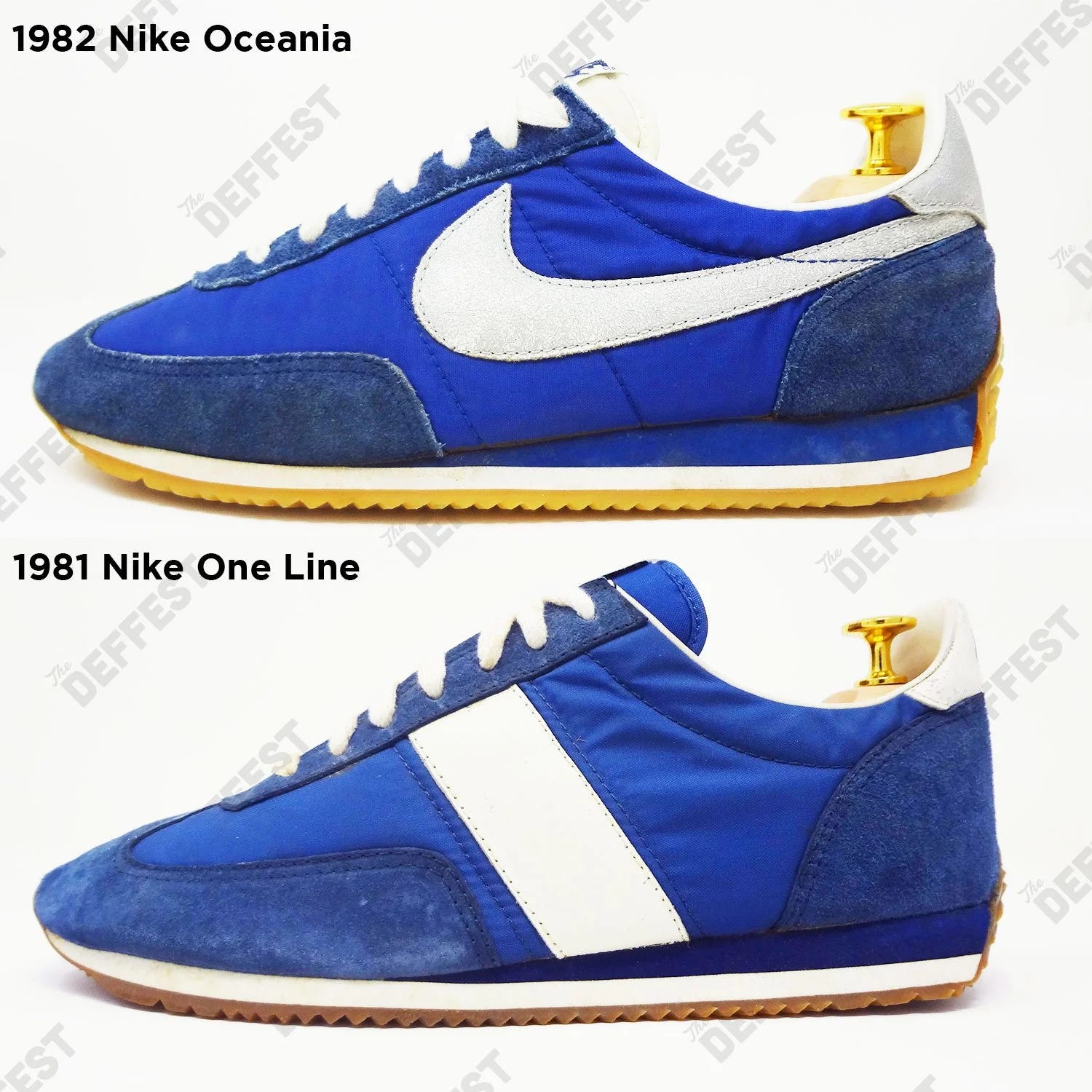
Nike took one of their existing shoes, the Oceania, removed all the branding and manufactured a limited line of them in a factory in America, selling them as cheaply as possible - at almost no profit. They called it the One Line. Hardly any were sold, but it hardly mattered. It enabled them to submit the shoe to US Customs as the benchmark against which their import customs bill should be calculated.
Now, the One Line was only one part of a multi-pronged battle against this slightly odd customs rule. But, and here we get to the significant bit, despite taking on the US government, not to mention the entire American trainer manufacturing industry, Nike eventually succeeded. The ASP rule was abolished. This rule granting American factories extra protection from foreign competition was removed. The barriers were pulled down.
This was, in retrospect, an extraordinarily significant moment in American economic history. And it dovetails with something I’ve spent rather a lot of time thinking about in recent years. If you were to draw up a list of the most important phenomena in the economy right now, I’d bet that pretty high up (maybe even at the top) would be the fact that Western nations have, increasingly, offshored much of their industrial production overseas. Much, as I said at the top, of the political instability we face right now, domestically and internationally, can be traced back to this. Oh, and if I’m right, this story is only going to get more intense in the coming years, as Europe and America has to reckon with a tidal wave of cheap Chinese cars/electronics/high-end chemicals etc etc.
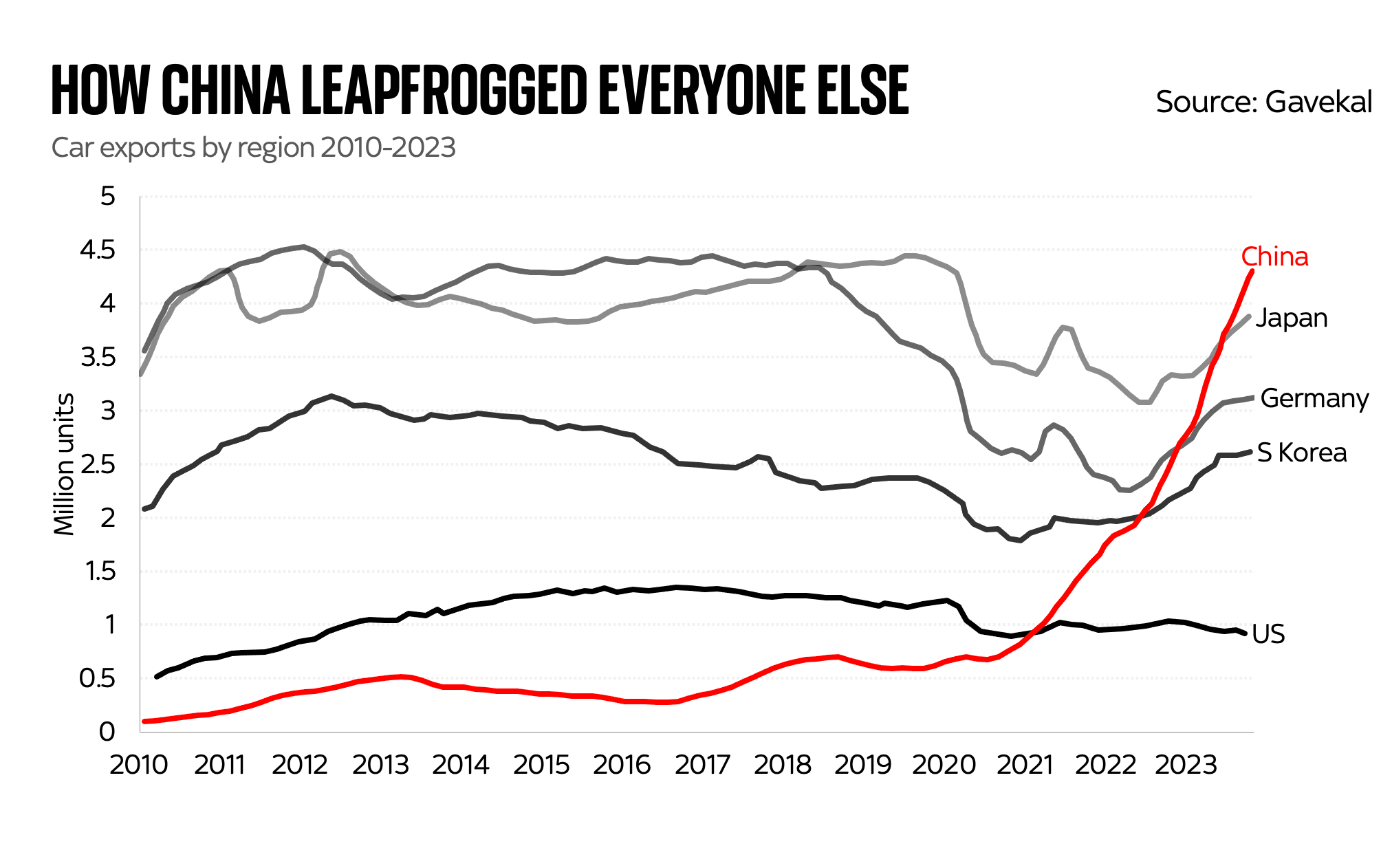
All of which is to say, this is massively important. It overshadows nearly every chapter of Trade World. And yet the history of this phenomenon is oddly rarely told. And this is why the One Line is such a significant shoe. It marked the moment it began to become nearly impossible for American sneaker manufacturers to compete with cheap Asian competition. It was the moment the Nike model - of designing shoes domestically and making them overseas - became the only practical way of running a major shoe-making business.
Knight and the One Line and the ASP battle were not the beginning of the story of offshoring, the story that helped carry Donald Trump to the White House (there’s much more on that history in Trade World). But this was nonetheless arguably the moment the tide turned. The One Line matters not because of the sneaker itself but because it was a sort of Trojan Horse for the untrammelled globalisation that resulted in the deindustrialisation of much of Europe and the West.
Would all this have happened anyway? Almost certainly, yes. As I document in the latest episode of Stuff Matters, one of the most interesting things about the trainer business is that, not all that long ago, both Nike and Adidas tried to re-shore production to North America and Europe. They failed dismally. It is simply not economical to make cheap sneakers domestically anymore. Even so, arguably the One Line saga and the end of the ASP helped accelerate this process. It represents a critical moment in history, one we should spend a little more time contemplating.
I happen to believe these little rabbit-holes, of the obscure back-stories of everyday objects, are a rather helpful way of telling bigger, deeper stories (something terrifyingly big stories like the origin of globalisation). And the good news is if you do, I have been collecting quite a few of them in our podcast series, Stuff Matters. If this has piqued your curiosity, have a listen. We’re trying to do something a little different to your standard podcast, so if you like it, do subscribe and maybe even suggest some other objects we could look at in a future season.
And stay tuned here for more stories in the coming weeks - about the world around us, and the unexpectedly fascinating lessons we can sometimes learn from the simplest everyday items.
Interesting background story, as usual, Ed. In terms of the ongoing global trade war, I am reminded of Walt Kelly’s Pogo. Back in 1970, he stated: “ We have met the enemy and he is us”.
Brilliant podcast series. Really enjoyed all the episodes. I also think they make excellent listening for all GCSE and A Level Geography students. I shall be recommending the whole series, and especially the final episode on globalisation of Nike and Apple, when I do my next Substack post. It won't be for a week or so, as I posted this morning, and holidays are only one a week! Thanks again.